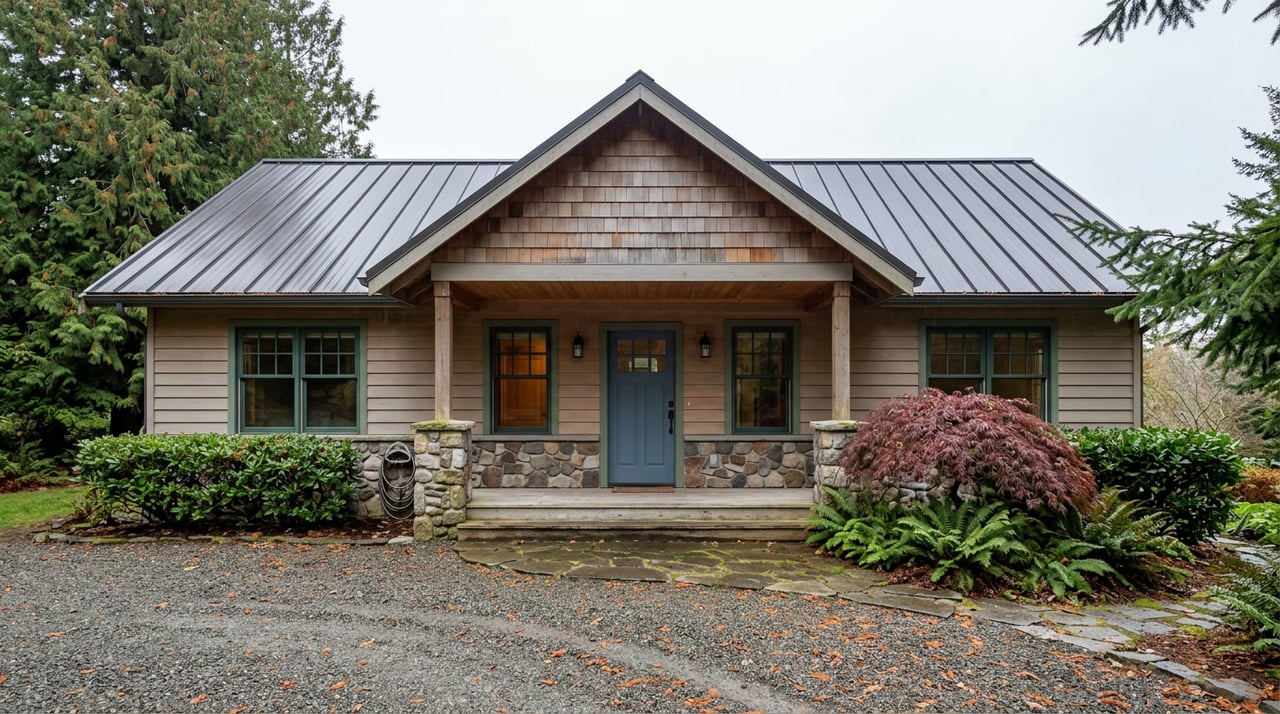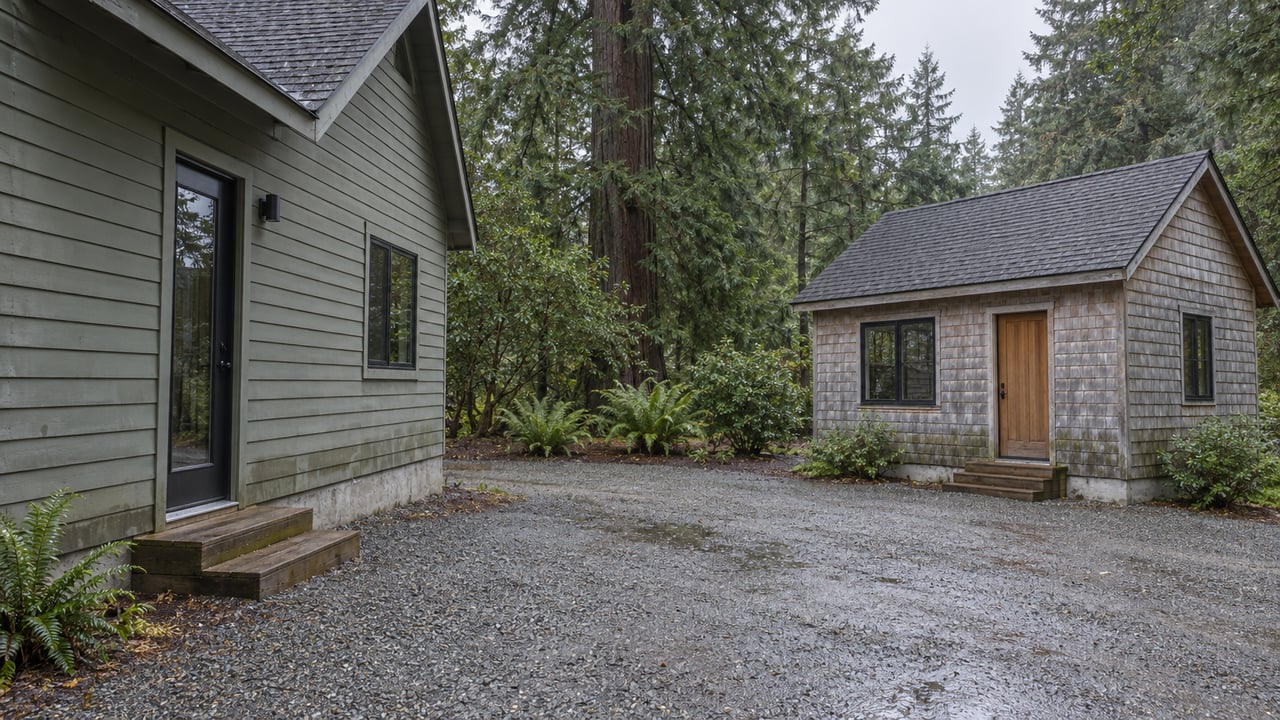
An investor working the numbers on a Del Norte County property with a main house and an accessory dwelling unit will usually build the pro forma around two rentable units. Two listings, two nightly rates, one mortgage. It is the kind of math that makes sense on a spreadsheet, and it is the kind of math the county will not let you run.
Del Norte County has one of the lighter regulatory footprints for short-term rentals on the California coast. There is no business license requirement for operating a vacation rental in the unincorporated county, and the Board of Supervisors has twice declined to adopt a general zoning use permit for the category. But buried inside the county's accessory dwelling unit rules is a single, specific restriction that overrides all of that flexibility the moment an ADU enters the picture: you cannot rent an ADU short-term, full stop.
What the County Actually Requires (and Doesn't)
The absence of red tape is real. According to county guidance, no business license is required to operate a vacation rental or Airbnb-style rental in the unincorporated areas. Registering to collect Transient Occupancy Tax means calling the Tax Collector's office, and county planning sign-off has historically not been a prerequisite for that registration. That framework has stayed largely unchanged since at least September 2022, when a Board of Supervisors presentation on the growth of vacation rentals in the county did not result in a new ordinance.
That presentation is worth sitting with, because it shows how far the county's hands-off approach actually extends. Tax Collector Barbara Lopez told supervisors that the county's cache of vacation rentals had grown from 131 to 196 properties over the prior five years, with single-family homes accounting for most of the increase, rising from 79 to 140 over that same window. After hearing from sixteen residents, most of whom owned an Airbnb or VRBO themselves, four supervisors concluded the growth wasn't a crisis worth regulating. District 3 Supervisor Chris Howard recused himself from the discussion because he owns vacation rentals.
Real estate agent Thomas Wortman and Gerhard Weber, a Crescent City Harbor District commissioner who also owns a vacation rental, both urged the board to let the market decide rather than cap or license the category.
"This is not the time to start prohibiting vacation rentals," Weber told the board.
Rick Shirley, who moved to Del Norte County after working in economic development in Utah and owns both long-term and vacation rentals locally, offered a different read on why the properties kept multiplying, tying it to people leaving higher-cost, higher-risk parts of the state and finding Del Norte County as an alternative.
None of that discussion touched ADUs directly. The ADU restriction came from a separate track entirely, and it is the one piece of Del Norte County's rental landscape that isn't loose at all.
The Line Crescent City Drew First
Crescent City moved first, adopting an ordinance that upholds short-term rental restrictions specifically for accessory dwelling units within city limits. The unincorporated county followed with its own version of the same restriction in November 2023, a few months after the city's took effect.
The county's own planning guidance states it plainly: short-term rentals of thirty days or less are not allowed in ADUs. A property owner can rent the primary residence and live in the ADU, or rent the ADU for stays longer than thirty days, but the short-term category is closed to the accessory unit no matter which jurisdiction the parcel sits in.
That detail matters for anyone assuming a move from inside Crescent City to the surrounding unincorporated county might unlock a workaround. It does not. Both jurisdictions arrived at the same rule within roughly two months of each other, and the restriction travels with the ADU designation itself, not with city limits.
What Two Units Can Still Do
The restriction narrows the field, but it doesn't close it. A two-unit property in Del Norte County still has real options, just not the "both units nightly" version an out-of-area investor might picture.
| Configuration | Allowed under current county and city rules |
|---|---|
| Main house rented short-term, ADU rented long-term (30+ days) | Yes |
| Owner lives in the ADU, main house rented short-term | Yes |
| ADU rented short-term while main house rented long-term | No |
| Both units rented short-term | No |
The workable versions still produce income from two units. They just require picking one unit for nightly stays and treating the other as a standard tenancy, or living on-site while the primary structure carries the short-term income. An appraiser, lender, or property manager unfamiliar with the local ordinance might model a deal as if both units qualify for nightly rates, and that assumption is exactly what the ordinance forecloses. Confirming zoning, Coastal Zone status, and use-permit requirements with County Planning before underwriting a two-unit plan is the difference between a workable deal and a spreadsheet that doesn't survive contact with the county code.
Why Supervisors Left the Rest Alone
The county's willingness to leave the broader vacation rental category unregulated tracks with what that growth has meant for public revenue. The increase in short-term rentals contributed to a documented uptick of roughly $424,000 in countywide Transient Occupancy Tax revenue over the five years ending in the 2021-22 presentation. The Crescent City Harbor District saw its own TOT collections rise from $140,558 in fiscal year 2019-20 to $272,688 in 2021-22, revenue tied to Measure C, the 2018 voter-approved measure that helps the Harbor District pay off a USDA loan.
That revenue trend helps explain why four supervisors were comfortable monitoring the vacation rental count rather than capping it. It does not explain the ADU carve-out, which reads less like a revenue decision and more like a housing-supply one. An ADU that can only be rented long-term or occupied by the owner stays in the pool of housing available to full-time residents in a way a nightly rental does not. The county got to preserve its light-touch posture on standalone vacation rentals while still drawing one firm line where two-unit conversions threatened to pull additional long-term housing stock into the short-term market.
The Math Against This Year's Market
The restriction lands differently depending on what the rest of the market is doing, and the current numbers argue for underwriting conservatively rather than optimistically. Over the three months ending May 2026, the median sale price for a home in Del Norte County was $417,000, down 19 percent from the same period the year before. Homes were taking an average of 61 days to sell, compared to 70 days the prior year, but sales volume itself had thinned out considerably: 8 homes sold that May versus 17 the year before.
A market moving that much on that little volume is not one where a property is likely to bail out an over-optimistic STR pro forma through appreciation. If the numbers on a two-unit deal only work when both units run nightly, the ADU restriction turns a marginal deal into a losing one, and a softening price trend removes the fallback of counting on resale value to cover the gap. Running the numbers on the restricted version of the property, long-term ADU income paired with short-term main-house income, or the reverse, is the version that has to pencil out before an offer goes in, not after.
Frequently Asked Questions
Can I rent the ADU short-term if I rent the main house long-term instead? No. The restriction applies to the ADU regardless of how the main house is used. Short-term rental of the accessory unit itself is what the ordinance prohibits.
Does it matter whether the property is inside Crescent City or in the unincorporated county? No. Crescent City adopted the restriction first, and the unincorporated county adopted its own version within a couple of months, in November 2023. The rule travels with the ADU, not with the jurisdiction line.
Is a business license required to run a standalone vacation rental in the unincorporated county? Not currently, according to county guidance, though registering for a Transient Occupancy Tax certificate with the Tax Collector's office is still required, and zoning or Coastal Zone review may apply depending on the parcel.
If you're evaluating a Del Norte County property with an existing ADU or planning to add one, the underwriting only holds up if it reflects what the ordinance actually allows. Green Pacific Real Estate Team works across sales, long-term rentals, and short-term rental management in Del Norte County, and can walk through the restricted version of a two-unit deal with you before you're a month into escrow.